How to Evaluate a Corrugator Machine Manufacturer: A 10-Point Technical Due-Diligence Checklist
Choosing the wrong corrugator machine manufacturer costs more than choosing the wrong model. A model can be changed at order stage; a supplier relationship lasts as long as the machine runs – through every mould set, every diameter addition and every spare part. This checklist is written to be used literally: take it into the supplier meeting and score each item.
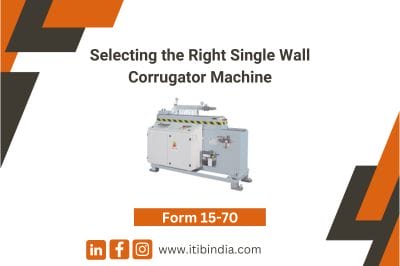
Machine-level selection – diameters, mould counts, output – is covered separately in selecting the right single wall corrugator machine and what is a corrugators machine. This article is about the company behind the machine.
Why supplier evaluation outranks machine evaluation
Corrugator specifications converge. Diameter envelopes, mould counts and installed power figures across serious manufacturers land in similar bands, because the physics does not vary. What varies enormously is what happens after the purchase order:
- Whether the datasheet figures hold in your plant, on your polymer, at your ambient temperature.
- Whether a new mould set for a new diameter takes six weeks or six months.
- Whether the machine can be extended, or has to be replaced, when volume grows.
- Whether a spare arrives before the line has been down for a week.
None of those appear on a specification sheet. All of them are visible if you ask the right ten questions.
Datasheet transparency and tolerance disclosure
1. Does the manufacturer publish full datasheets, not marketing summaries?
A complete corrugator datasheet states overall dimensions and weight, extrusion axis height, chain length, closing length, mould count, installed power, voltage and frequency, auxiliary circuit voltage, water temperature and consumption, air pressure and consumption, workable diameter range, output by polymer, and maximum mechanical speed. If a supplier gives you three numbers and a photograph, you cannot size a line from it.
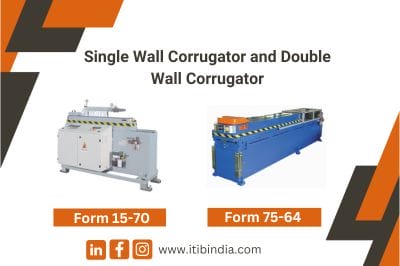
For reference, every ITIB model page carries the full datasheet – see Form 65-54/74 or Form 75-64.
2. Is the output tolerance stated, and on which polymer?
Output figures are theoretical. They depend on the material used, the pipe diameter being produced, ambient temperature, pipe profile and extruder capacity. A manufacturer who states this openly, and quotes a tolerance band, is giving you something you can plan against.
Ask: “Is this output figure PVC, PP or HDPE, and what is the tolerance?” On the ITIB range the answer is explicit – output is quoted per polymer at ±10%. On the Form 65-54/74 that is 140 kg/hr PVC and 80 kg/hr for PP and HDPE. A single unlabelled headline figure is a red flag.
Mould and tooling capability
3. Can the mould chain be extended, or is capacity fixed at purchase?
This is the highest-value question on the list, because it determines whether growth means adding moulds or buying a second machine. Manufacturers that design for extension will say so on the datasheet.
| ITIB model | Base moulds | Extendable to | Capacity added without new frame |
| Form 32-52/72 | 52 | 72 | +20 moulds |
| Form 32-72/92 | 72 | 92 | +20 moulds |
| Form 65-54/74 | 54 | 74 | +20 moulds |
4. Does the manufacturer make its own moulds, and across what diameter range?
Mould blocks are the consumable-adjacent part of a corrugator. A supplier that makes moulds in-house controls lead time on new diameters and profiles; a supplier that outsources does not. Ask for the diameter and profile range the manufacturer can cut, and whether critical shapes are supported.
Small diameters and uneven profile diameters need a vacuum system to hold shape reliably. Confirm the vacuum option is available and rated – the ITIB V-range option specifies a pumping speed of 300 m³/h.
Scope of supply
5. Corrugator only, or complete line?
There is a real difference between buying a corrugator and buying a corrugated pipe line. A complete-line supplier takes responsibility for the interfaces: extruder-to-die-head, die-head-to-corrugator centreline, cooling circuit design, downstream handling. A corrugator-only supplier hands you the integration risk.
ITIB India supplies complete lines – for the Electrical Conduits configuration that is raw material feeding, hopper drier, extruder, die head, corrugator, dies and moulds for multiple dimensions and manual winders, producing conduit from 16 mm O.D. up to 63 mm O.D. The full scope is described in complete turnkey solution for single wall and double wall corrugated pipes.
6. Does the product range actually cover your growth path?
Check the diameter envelope against the products you intend to sell in three years, not the ones you sell today. A supplier whose range stops where your plan begins will force a second supplier relationship later.
| Range | Coverage | Reference |
| Single wall corrugators | 4.5 mm I.D. up to 65 mm O.D. | Single wall corrugated pipe making machine |
| Double wall corrugators | Up to 75 mm O.D. | Double wall corrugated pipe making machine |
| Materials | PE, PP, PVC, PA, EVA | – |
| Applications served | Electrical conduit, harness pipe, medical tube, washing machine pipe, sanitary pipe, telecom duct, drainage | Application pages |
Installation, utilities and commissioning
7. Will the machine physically fit and integrate?
Get these four figures in writing before the order, not at delivery:
- Extrusion axis height. ITIB single wall models are built to 1,050 ±20 mm, double wall to 1,160 ±20 mm. Your extruder centreline and your coiler must match – the Coilers range works to 1,100–1,150 mm.
- Overall dimensions and weight. ITIB single wall models run from 1,550 mm long and 600 kg (Form 15-70) to 2,800 mm and 1,400 kg (Form 32-72/92); double wall models are 4,000 mm long and 2,000 kg without moulds.
- Utility duties. Chilled water at 6–8 °C (single wall) or 8–10 °C (double wall, two circuits), 2,000–3,000 LT/H, plus 1,500 LT/H for the DWC mandrel circuit; 7 bar air at 60 Nm³/h on double wall; supply at 230–400 V, 50–60 Hz with 24 V DC auxiliary.
- Ambient limits. ITIB machines are rated for 5–40 °C operating temperature and up to 95% humidity. In Indian plant conditions this matters – confirm the rating rather than assuming it.
Sizing methodology for the full line is set out in corrugated pipe production line capacity planning.
8. What commissioning and operator training is included in the quoted price?
Ask for it as a line item, with days on site and scope. A quoted machine price with commissioning “to be discussed” is an open cost.
Support and track record
9. Spares availability and service response
The questions that matter: which parts are held in India, what is the lead time on mould blocks, what is the lead time on chain components, and who performs the service visit. Ask for the answers as figures. Vague reassurance about support is not a specification.
10. Manufacturing track record and installed base
Longevity in corrugator manufacturing is meaningful because the failure modes are slow – chain wear, mould wear, cooling fouling – and only show up over years of running. ITIB Machinery India Pvt. Ltd. is part of ITIB Machinery International, which has delivered extrusion lines for single and double wall corrugated pipe for more than five decades. Ask any shortlisted manufacturer for reference installations in your diameter range and your polymer.
Red flags in supplier claims
| Claim | Why it is a problem | What to ask instead |
| A single headline output figure with no polymer named | PVC and HDPE ratings can differ by nearly 2× on the same machine | “Give me kg/hr for PVC, PP and HDPE separately” |
| No tolerance band on output | You cannot plan contracted volumes against it | “What is the tolerance, and on what basis?” |
| “Fits any extruder” | Extrusion axis height mismatch is a real integration cost | “What is the extrusion axis height and tolerance?” |
| Mould count quoted without chain length | Chain length is what determines cooled contact time | “What is the chain length and closing length?” |
| Capacity described as upgradeable, with no mechanism stated | Upgrade may mean a new machine | “Is the mould chain extendable, and to how many moulds?” |
| No published datasheet | Nothing to hold the supplier to | “Send the full datasheet before we proceed” |
Supplier scorecard
Score each shortlisted corrugator machine manufacturer 0–2 and total out of 20. Anything below 14 should not proceed to commercial negotiation.
| # | Criterion | 0 | 1 | 2 |
| 1 | Full datasheet published | None | Partial | Complete, per model |
| 2 | Output stated per polymer with tolerance | No | One polymer | All polymers, tolerance stated |
| 3 | Extendable mould chain | Fixed | Some models | Stated on datasheet, multiple models |
| 4 | In-house mould and vacuum capability | Outsourced | Partial | In-house, rated vacuum option |
| 5 | Complete line scope | Corrugator only | Partial line | Full turnkey |
| 6 | Diameter range covers 3-year plan | No | Partial | Full range |
| 7 | Installation data supplied pre-order | No | On request | Published |
| 8 | Commissioning and training itemised | Not quoted | Mentioned | Days and scope specified |
| 9 | Spares held locally with stated lead times | No | Informal | Stated in writing |
| 10 | Track record in your diameter and polymer | None | Adjacent | Direct references |
Frequently asked questions
What should I check before choosing a corrugator machine manufacturer?
Check that full datasheets are published, that output is quoted per polymer with a stated tolerance, that the mould chain is extendable, that the manufacturer makes moulds in-house, that the scope covers the complete line, and that spares and commissioning are specified in writing rather than described in general terms.
Why does output tolerance matter when comparing corrugator manufacturers?
Output figures are theoretical and vary with material, pipe diameter, ambient temperature, pipe profile and extruder capacity. A manufacturer quoting ±10% is telling you the planning band. An unqualified figure cannot be planned against and cannot be contractually held.
What is an extendable mould chain and why does it matter?
An extendable mould chain lets you add mould blocks to an installed corrugator to raise output without replacing the machine. ITIB’s Form 32-52/72 extends from 52 to 72 moulds, the Form 32-72/92 from 72 to 92 and the Form 65-54/74 from 54 to 74.
Should I buy a corrugator alone or a complete line?
A complete line places responsibility for the interfaces – extruder to die head, die head to corrugator centreline, cooling circuit design, downstream handling – with one supplier. Buying units separately transfers that integration risk to you.
What diameter range does ITIB India cover?
ITIB India’s single wall corrugators cover 4.5 mm I.D. up to 65 mm O.D. and double wall corrugators cover up to 75 mm O.D., in thermoplastics including PE, PP, PVC, PA and EVA.
How do I verify that a corrugator will physically fit my existing line?
Confirm extrusion axis height, overall dimensions, machine weight and utility duties before ordering. ITIB single wall corrugators are built to an extrusion axis height of 1,050 ±20 mm and double wall models to 1,160 ±20 mm.